Phone:
+971 58 633 1106
Physical address:
Abu Dhabi
Phone:
+971 58 633 1106
Physical address:
Abu Dhabi
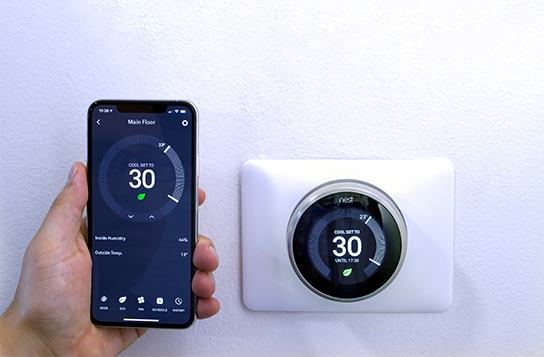
Controlling your cooling from your phone sounds convenient. Before buying a smart thermostat for your Abu Dhabi home, however, start with a more important question: will it work correctly with the air-conditioning system already installed?
A good upgrade begins with an assessment, not a shopping list. The aim is practical control that suits your home, your routine and the equipment you already own.
“Smart” describes connectivity and features; it does not establish electrical compatibility. Google’s documentation, for example, describes its relevant Nest thermostats as designed for most 24 V systems and identifies compatibility restrictions. That is not a blanket recommendation for an Abu Dhabi installation. Check the exact product model and regional specifications against your system. Google Nest compatibility guidance.
Share the AC model if readily available, a photograph of the existing controller’s exterior, and the functions you currently use. Explain whether you own or rent the property and whether building management controls any part of the cooling system.
Do not remove a controller or expose wiring to collect this information. Ask a qualified technician to check electrical and control requirements.
Write down your priorities before comparing products. Do you mainly want a daily schedule, remote access, separate room control or a simpler interface?
Scheduling can adjust temperatures automatically around occupancy. However, features and supported systems vary, so ask the installer to demonstrate the functions included in the proposed solution. US Department of Energy: programmable thermostats.
Also ask what happens when the internet is unavailable, who owns the administrator account, and whether any required features carry subscription fees. These should be purchase questions, not surprises after installation.
DEWA recommends a summer thermostat setting of 24°C and regular filter cleaning. Use this as general UAE conservation guidance—not an Abu Dhabi tariff rule or a guaranteed saving. Adjust settings to household needs and the equipment’s operating guidance. DEWA appliance guidance.
Humidity deserves attention too. The US EPA recommends keeping indoor relative humidity below 60%, ideally between 30% and 50% where possible. Persistent condensation or dampness warrants investigation rather than simply changing a thermostat setting. EPA moisture guidance.
Avoid accepting a fixed saving percentage without a clear explanation of the assumptions and how results will be measured.
If your concern is weak cooling, water leakage or unusual operation, request a maintenance assessment first. Describe when the problem occurs and which rooms are affected.
Ask for separate recommendations for repairing the existing system and upgrading its controls. This makes the purpose and cost of each part of the work easier to understand.
Electrical faults, exposed wiring and refrigerant work are not DIY tasks. Leave inspection and repair to a qualified technician.
No. Connectivity alone does not establish compatibility. The exact AC system, controller requirements and thermostat specifications must be checked.
No. Ask how the proposed setup would change your current use and how any claimed saving would be evaluated. Do not treat marketing percentages as a personal guarantee.
If cooling is unreliable or there is a suspected fault, start with an assessment. Request a clear distinction between repair work and optional control upgrades.
Considering smart AC control or experiencing a cooling problem in Abu Dhabi? Contact Bayti360 to discuss your existing setup and the assessment needed before choosing a solution.